Product × Engineering · Visa · Unified Checkout
Merged.
Three UI fixes had sat in backlog for months. I opened the pull request myself — and it became the first confirmed Global Design contribution to a Visa product codebase.
- Role
- Design, authored & shipped
- Timeline
- June 2–17, 2026
- Sponsors
- VP Product · Sr Director Eng
- Result
- 70–90% faster UX delivery
The backlog nobody had time for
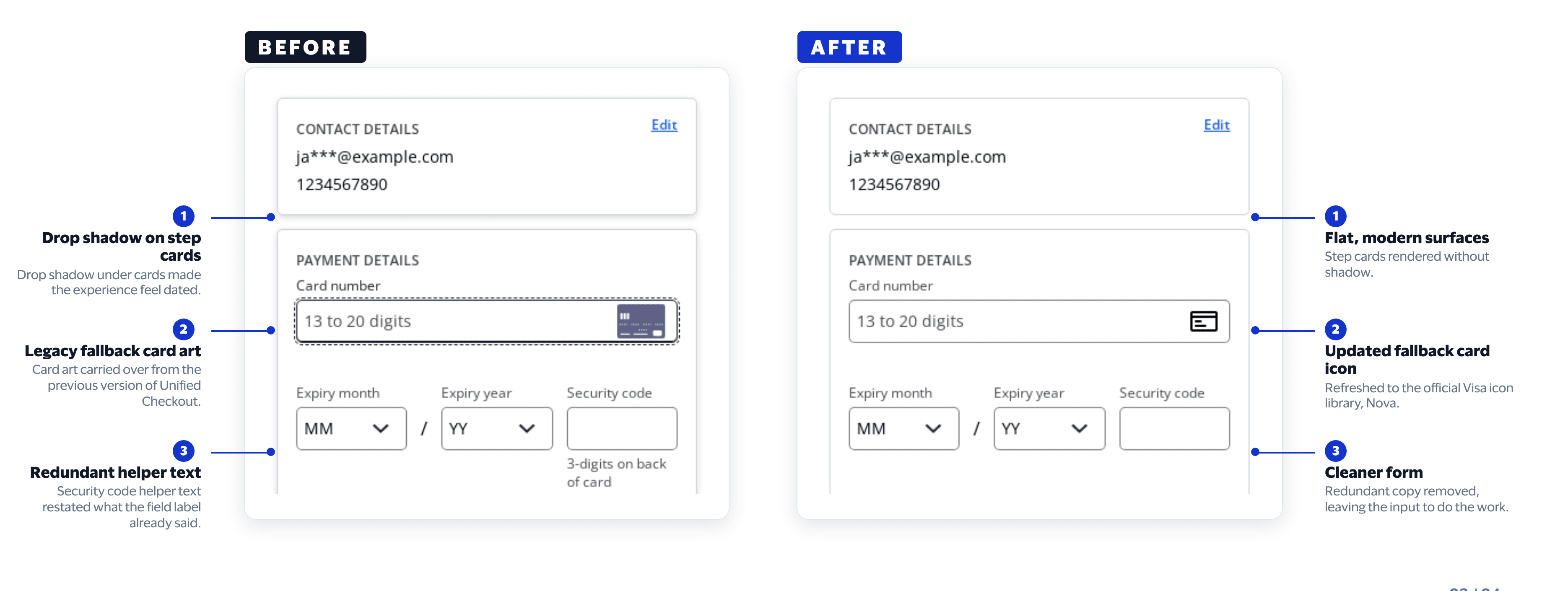
Unified Checkout is the shared checkout experience behind several Visa products. Three real UI issues had been sitting in its backlog for months: a drop shadow on the step cards that made the whole surface feel dated, fallback card art left over from a previous version, and helper text that simply restated the field label above it.
None of them were urgent enough to win a sprint on their own, and each one required an engineering handoff to fix. So none of them moved. That's not a story about anyone dropping the ball — it's what happens to small, real debt in a system where every fix has to wait in line behind bigger priorities.
I opened the pull request myself
Working with Claude Code, I made the fix directly inside Unified Checkout's production codebase: flat, modern surfaces in place of the dated shadow, fallback card art refreshed to Visa's current icon library, and the redundant copy removed so the input could do the work on its own.
Then I opened PR #2086, and engineering reviewed and approved it through the exact same process any engineer's pull request goes through — no shortcut, no separate lane for “design's version.” Governance stayed intact. Only the starting point changed.

Why it mattered more than the fix itself
Visa's VP of Product and Senior Director of Acceptance Solutions Engineering sponsored the work — not because three small UI fixes needed executive attention, but because the PR was evidence of something bigger. It validated two new paths for shipping UX work: design builds directly in the product code and engineering reviews it, or design hands off working code instead of static comps. Either path moves an order of magnitude faster than the old handoff model.
70–90% faster
From 5–10 days per change under the old design-to-engineering handoff, to 1–3 days when design works in code with AI.
Design no longer just defines. It delivers.